Custom Grip Socks5 min read
Embroidered vs. Knitted Logos: Which Is Best for Your Custom Grip Socks?
Two techniques. Two different finishes. One goal: bringing your studio's identity to life.
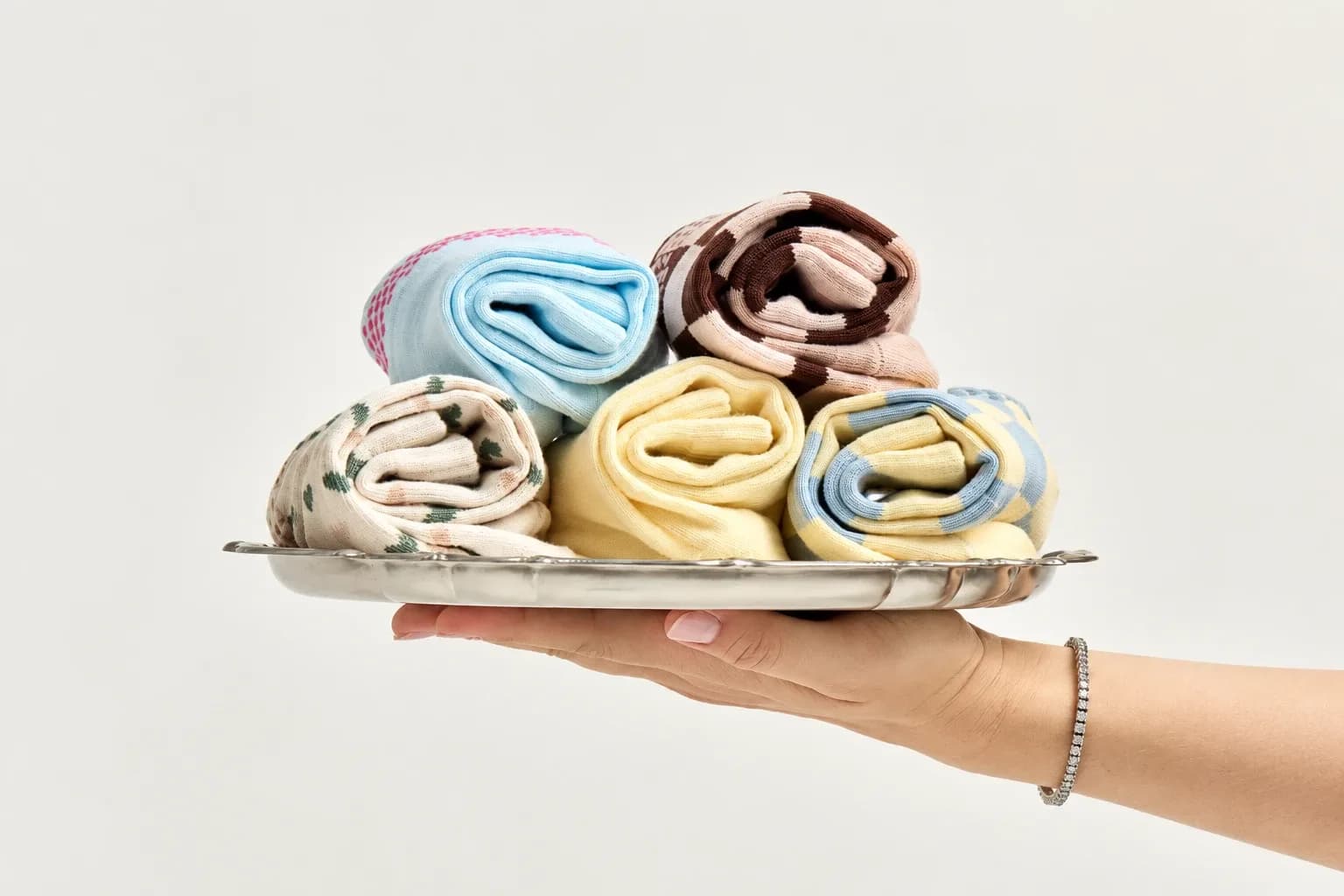
When designing custom grip socks for your Pilates studio, the details matter.
From the colors you choose to the placement of your logo, each element contributes to how your brand is represented.
One of the most important design decisions is how your logo will appear on the socks.
Two popular customization techniques are embroidery and knitted-in designs.
While both create excellent results, they offer different aesthetics, textures, and design possibilities.
Understanding these differences can help you choose the finish that best reflects your studio's personality.
Let's explore what makes each technique unique.
1. What Are Embroidered Grip Socks?
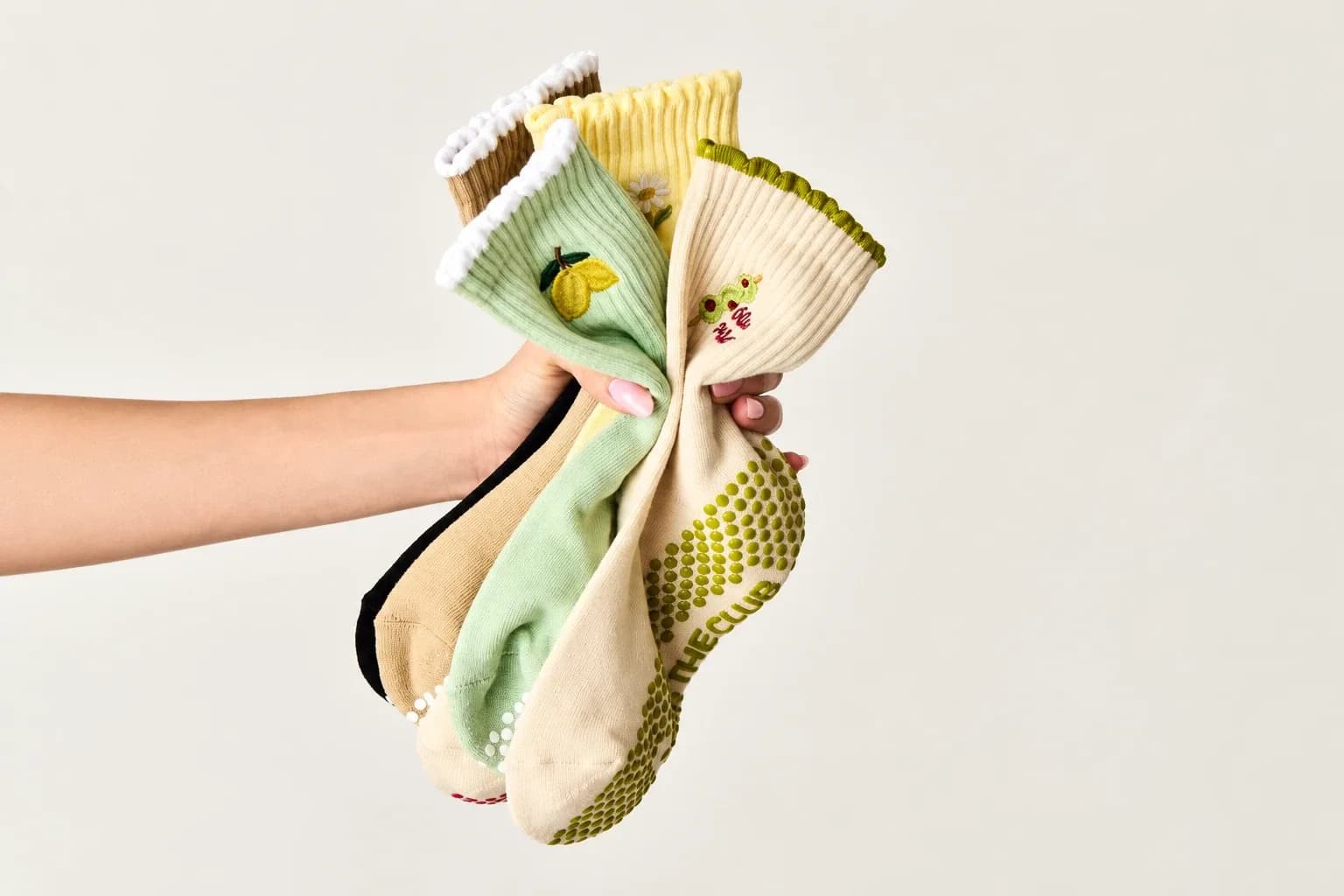
Embroidery is a customization technique where your logo or design is stitched onto the sock using embroidery threads.
The design is applied to the knitted fabric, creating a slightly raised finish that can be seen and felt.
This technique is often associated with a refined, detailed appearance.
What Makes Embroidery Special?
A Textured Finish
Embroidery adds dimension to your logo. The stitches create a tactile surface that can make your branding stand out from the fabric.
Defined Design Details
Embroidery reproduces distinct shapes, lettering, and decorative elements with clarity.
A Premium Aesthetic
The raised texture can give your socks a sophisticated appearance, especially when paired with neutral colors and a well-placed logo.
Striking Contrast
An embroidered logo is particularly eye-catching when the thread color contrasts with the sock.
Imagine cream grip socks featuring a dark chocolate embroidered logo, or soft beige socks with deep burgundy lettering.
The effect can be subtle yet distinctive.
When Should You Choose Embroidery?
Embroidery may be a good choice if your studio has:
- A compact logo or recognizable symbol.
- A design that benefits from a slightly raised texture.
- A refined, boutique-inspired aesthetic.
- Branding that looks beautiful with contrasting thread colors.
Embroidery works especially well for compact logos, symbols and short lettering.
Our team adapts fine details so every logo stitches out crisp and clear.
The result is a design that feels refined, dimensional, and distinctive.
2. What Are Knitted Logo Grip Socks?
With knitted-in customization, the logo becomes part of the sock's fabric during the knitting process.
Instead of adding a design to the surface afterward, different yarn colors are incorporated directly into the knit structure.
The result is a logo that is integrated into the material itself.
What Makes Knitted Logos Special?
A Seamless Visual Appearance
Knitted logos can blend naturally into the sock's overall design, creating a cohesive and understated look.
Integrated Branding
Because the design is formed with the fabric, it feels like an original part of the sock rather than an added decorative element.
A Clean, Minimal Aesthetic
Knitted-in logos are particularly appealing for studios that prefer subtle branding and simple design elements.
Creative Color Combinations
Contrasting yarn colors can create distinctive logos, stripes, lettering, or decorative patterns.
Imagine a white sock with a soft sage green knitted logo, or a chocolate brown sock featuring cream-colored lettering.
The result feels effortlessly coordinated.
When Should You Choose a Knitted Logo?
A knitted-in design may be ideal if your studio has:
- A minimalist visual identity.
- A relatively simple logo or wordmark.
- A preference for branding integrated into the fabric.
- A design that works well with solid colors and clean shapes.
Bold, recognizable artwork knits beautifully, and we fine-tune details so your logo stays sharp.
Simple, recognizable artwork often delivers the strongest results.
3. Embroidery vs. Knitted Logos: The Main Differences
Although both techniques look premium, they create different visual and tactile results.
| Feature | Embroidered Logo | Knitted Logo |
|---|---|---|
| Technique | Stitched onto the sock | Integrated during knitting |
| Texture | Slightly raised | Incorporated into the fabric |
| Appearance | Defined and dimensional | Clean and integrated |
| Design style | Boutique and decorative | Minimal and cohesive |
| Detail | Crisp, defined lines | Clean, bold shapes |
| Best suited for | Compact symbols and distinctive logos | Simple wordmarks and graphic shapes |
Neither technique is universally better.
The right choice depends on your logo, your preferred aesthetic, and the style of sock you choose.
4. Which Option Looks More Premium?
One of the most common questions when designing custom grip socks is which technique creates a more premium appearance.
The truth is that both look luxurious when executed well.
Embroidery can feel particularly refined because of its raised texture and decorative finish.
It creates an elegant contrast against the knitted fabric and bring attention to a carefully positioned logo.
Knitted-in branding offers a different kind of sophistication.
Its integrated appearance creates a sense of simplicity and consistency, making it particularly attractive for minimal, contemporary studio brands.
Consider two different Pilates studios.
One embraces warm beige interiors, elegant typography, and subtle decorative details.
An embroidered logo would complement that aesthetic perfectly.
Another studio has a modern identity built around clean lines, monochromatic colors, and understated design.
A knitted logo could feel like a more natural extension of that brand.
Premium design isn't defined by a single technique. It's created through the right choices and attention to detail.
5. How to Choose the Right Technique for Your Studio
Before deciding between embroidery and knitted-in branding, consider these questions.
What Does Your Logo Look Like?
A compact icon works wonderfully with embroidery, while a simple wordmark translates well into a knitted design.
What Aesthetic Defines Your Studio?
Do you prefer a textured, decorative finish or clean, integrated branding?
How Prominent Should Your Logo Be?
Some studios prefer a clearly visible logo, while others want something understated.
What Colors Are Part of Your Brand?
Think about the contrast between the sock and your chosen logo color.
Where Will the Logo Be Positioned?
Logo placement helps decide which technique will shine on your design.
What Experience Do You Want to Create?
Think beyond appearance and consider how your chosen design reflects your studio's atmosphere, identity, and community.
The best decision is the one that best expresses your visual identity on the sock.
6. Make the Design Uniquely Yours
Custom grip socks are more than another studio accessory.
They're an opportunity to turn an everyday Pilates essential into a recognizable part of your brand.
Whether you prefer the dimensional finish of embroidery or the clean appearance of knitted-in branding, the goal remains the same.
Create something that feels connected to your studio.
A pair of socks your clients genuinely enjoy wearing.
A design that complements your space.
A small but memorable detail that reflects the identity you've worked so hard to build.
Because the most effective branding is often found in the details.
Your Logo. Your Style. Your Studio.
At The Reform Grips, we believe that great custom grip socks begin with great design.
From selecting colors to exploring different logo finishes, every decision helps bring your studio's identity to life.
Whether you're creating your first custom collection or refreshing an existing design, choosing the right customization technique is an important part of the process.
Your studio deserves accessories that feel as unique as your brand.
Design yours with your logo, your colors from 336 yarn shades and your own grip pattern, from 50 pairs.
More from the Journal
Custom Grip Socks4 min read
Why Custom Grip Socks Matter for Your Pilates Studio
More than a Pilates essential. A reflection of your studio's identity.
Read article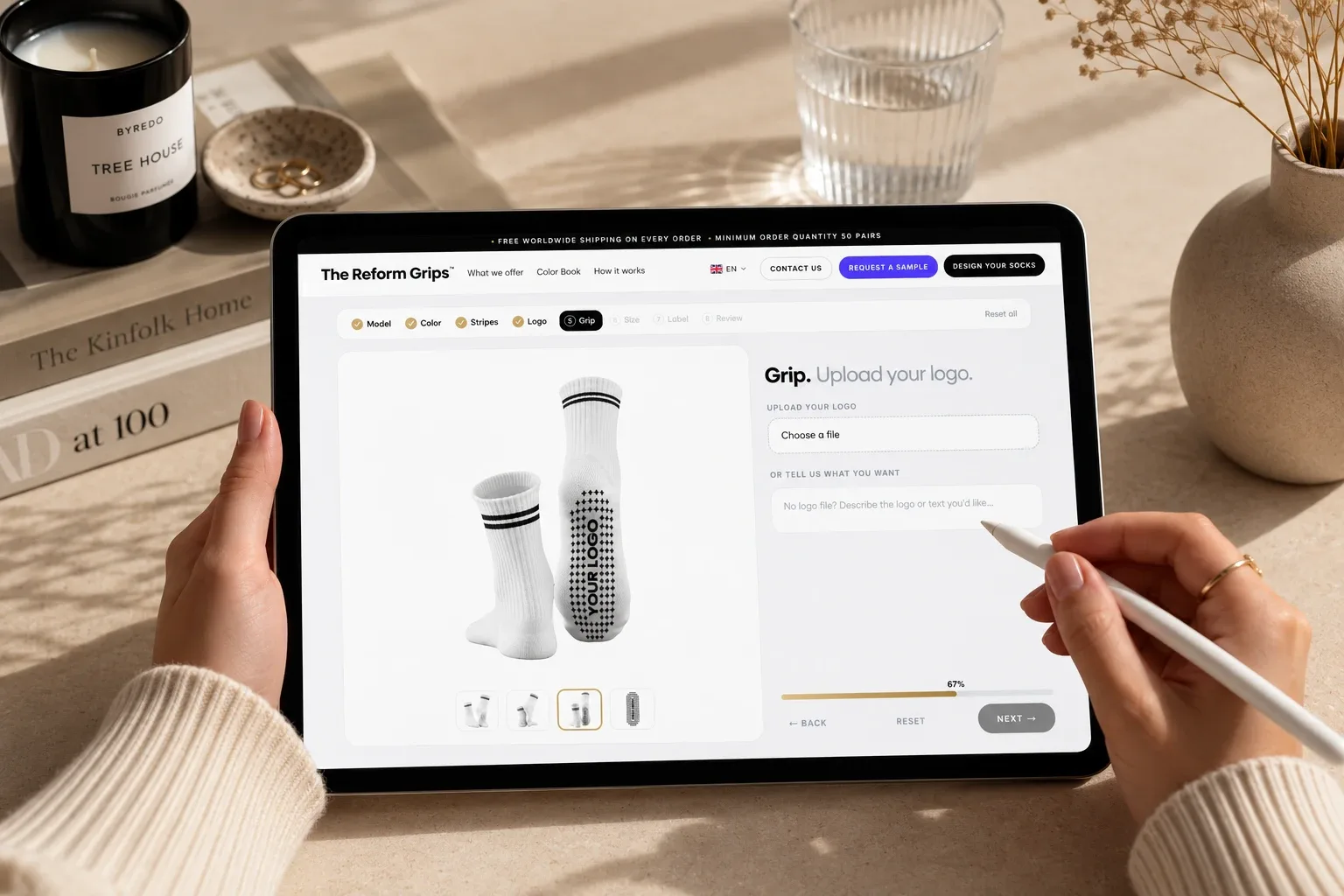
Custom Grip Socks5 min read
How to Design the Perfect Custom Grip Socks for Your Pilates Studio
Your colors. Your logo. Your identity. Every detail designed around your brand.
Read article
Studio Experience3 min read
5 Ways to Elevate Your Pilates Studio Experience
Small details. Lasting impressions. A studio experience your clients will remember.
Read article